- English
- Español
- Português
- русский
- Français
- 日本語
- Deutsch
- tiếng Việt
- Italiano
- Nederlands
- ภาษาไทย
- Polski
- 한국어
- Svenska
- magyar
- Malay
- বাংলা ভাষার
- Dansk
- Suomi
- हिन्दी
- Pilipino
- Türkçe
- Gaeilge
- العربية
- Indonesia
- Norsk
- تمل
- český
- ελληνικά
- український
- Javanese
- فارسی
- தமிழ்
- తెలుగు
- नेपाली
- Burmese
- български
- ລາວ
- Latine
- Қазақша
- Euskal
- Azərbaycan
- Slovenský jazyk
- Македонски
- Lietuvos
- Eesti Keel
- Română
- Slovenski

Loss In Weight Feeders
When it comes to precise material feeding in industrial processes, Loss In Weight Feeders stand out as a reliable and efficient solution. These systems are designed to deliver accurate and consistent dosing of bulk solids, powders, and granules, ensuring optimal performance in various applications such as food processing, pharmaceuticals, plastics, and chemicals. The core principle involves continuously weighing the material as it is discharged from a hopper, allowing for real-time adjustments to maintain the desired feed rate. Our range includes advanced options like the Continuous Loss In Weight Feeder, which offers uninterrupted operation for high-demand environments. For comprehensive integration, the Loss In Weight Feeder System combines multiple components for seamless automation. In scenarios requiring minimal downtime, our Refilling Continuous Loss-in-Weight Feeders enable smooth refill cycles without disrupting the feeding process. Additionally, for applications demanding extreme precision, the High Accuracy Continuous Loss In Weight Feeder ensures deviations are kept to a minimum, enhancing product quality and reducing waste. Key advantages of Loss In Weight Feeders include their ability to handle a wide range of materials, from free-flowing to cohesive substances, and their adaptability to harsh industrial conditions. By incorporating robust construction and user-friendly controls, these feeders support operational efficiency and compliance with industry standards.
The design and functionality of Loss In Weight Feeders make them indispensable in modern manufacturing. At the heart of the <产品名字> is a weighing system that typically includes a load cell for real-time mass measurement, coupled with a controller that processes data to adjust the discharge mechanism, such as a screw or vibratory tray. This setup allows for precise control over feed rates, which is critical in processes where ingredient proportions directly impact the final product. Common parameters and features of Loss In Weight Feeders are outlined below to highlight their versatility and performance capabilities.
- Feed Rate Range: 0.1 kg/h to 50,000 kg/h, adaptable to various production scales
- Accuracy: Up to ±0.25% for standard models, with high-accuracy versions achieving ±0.1% or better
- Materials of Construction: Options include stainless steel (e.g., 304 or 316 grade) for corrosion resistance, carbon steel for general use, and specialized coatings for abrasive or hygienic applications
- Control System: Integrated PLC with touchscreen interface, supporting protocols like Profibus, Ethernet/IP, or Modbus for seamless plant integration
- Hopper Capacity: Ranges from 5 liters for laboratory use to over 500 liters for industrial-scale operations, with custom sizes available
- Discharge Mechanisms: Choices include single or twin screws, vibratory trays, and belt systems, selected based on material characteristics like flowability and density
- Environmental Protection: IP65 or higher ratings for dust and moisture resistance, ensuring reliability in challenging conditions
- Additional Features: Options for heating/cooling jackets, dust extraction ports, and automated refill systems to minimize operator intervention
| Parameter | Specification | Application Examples |
|---|---|---|
| Max. Feed Rate | 50,000 kg/h | Large-scale chemical compounding, cement production |
| Accuracy Tolerance | ±0.1% to ±0.5% | Pharmaceutical blending, food ingredient dosing |
| Power Supply | 110-480V AC, 50/60 Hz | Global industrial facilities with varying electrical standards |
| Communication Interfaces | Ethernet, Profibus, 4-20 mA signals | Integration with SCADA or ERP systems for data logging |
| Operating Temperature | -20°C to 80°C | Environments with extreme thermal conditions, such as plastics extrusion |
| Maintenance Interval | Recommended every 6-12 months | Reduces downtime in continuous operations like mining or recycling |
Related Products


Hot Products

Industrial Plastic Process Dryers
Industrial Plastic Process Dryers is crafted by Dongguan Niasi Plastic Machinery Co., Ltd. which is a leading provider of customized solutions in the realm of Internet of Things (IoT) intelligent central feeding systems and constant pressure water supply systems.
Cabinet Dryer
All kinds of polymer materials can be dried, including several materials drying at once, using the Niasi Factory's Cabinet Dryer design and production. It works especially well with small amounts or a diversity of raw materials, which makes it perfect for trial molds or other applications where material variability is important.
Silent Crusher
Niasi is a Chinese factory specializing in the production and supply of Silent Crusher. It is a national high-tech enterprise that integrates research and development, design, production, sales, and installation. The company focuses on powder/granule conveying projects for large plastic enterprises.
Water Cooled Chillers
Niasi's Water Cooled Chillers utilizes a tube-type condenser, ensuring fast heat conduction and excellent heat dissipation. Water Cooled Chillers can provide ice water ranging from 5 to 35°C, with the low-temperature type capable of reaching as low as 3°C (temperature difference not exceeding ±1°C). The compressor power ranges from 3HP to 50HP, with a cooling capacity of up to 7800 to 128500 Kcal/hr.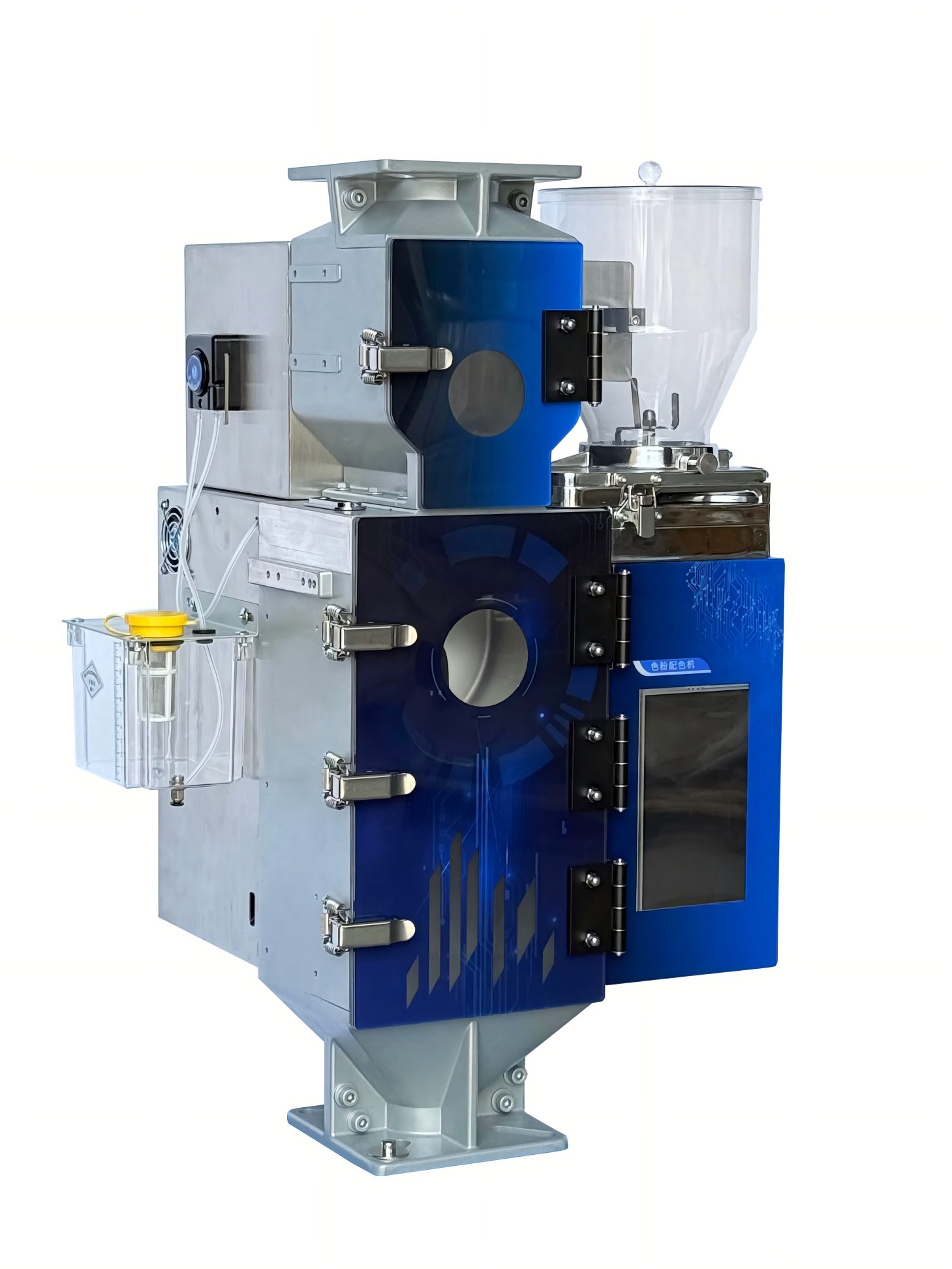
Intelligent Color Powder Mixing
"Intelligent Color Powder Mixing" can be seamlessly integrated with centralized feeding systems, central conveying systems, and automatic material handling systems. The Plastic Color Mixer is equipped with high-precision weighing sensors, which ensures the uniformity of the mixing process and the consistency of color, and supports automatic proportioning of multi-component powders and additives.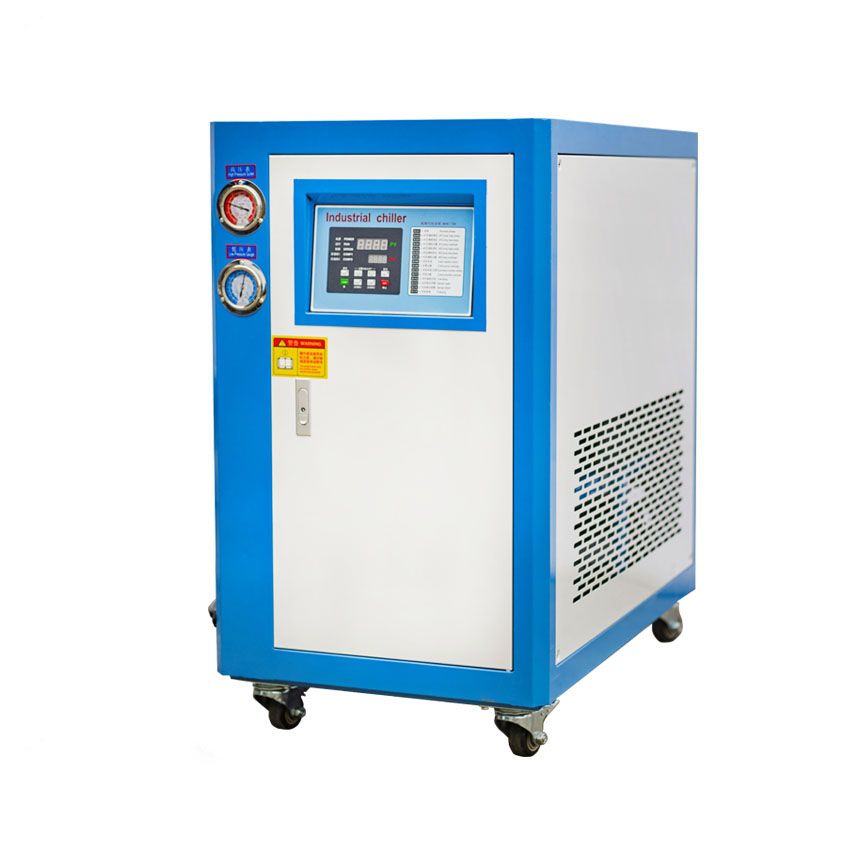
Water cooled chiller with Smart Temperature Control
Niasi Water cooled chiller with Smart Temperature Control is are widely applied in injection molding, mold manufacturing, blow molding, electronic and electrical appliances and many other industries. Customized design is available to meet the cooling requirements of different industries. It supports multi-language system and is equipped with an intelligent temperature control system, ensuring stable product operation.
- Related Blog
- Reviews