- English
- Español
- Português
- русский
- Français
- 日本語
- Deutsch
- tiếng Việt
- Italiano
- Nederlands
- ภาษาไทย
- Polski
- 한국어
- Svenska
- magyar
- Malay
- বাংলা ভাষার
- Dansk
- Suomi
- हिन्दी
- Pilipino
- Türkçe
- Gaeilge
- العربية
- Indonesia
- Norsk
- تمل
- český
- ελληνικά
- український
- Javanese
- فارسی
- தமிழ்
- తెలుగు
- नेपाली
- Burmese
- български
- ລາວ
- Latine
- Қазақша
- Euskal
- Azərbaycan
- Slovenský jazyk
- Македонски
- Lietuvos
- Eesti Keel
- Română
- Slovenski

How Does a Gravimetric Blender Improve Your Production Efficiency?
Summary
Gravimetric blenders are revolutionizing the plastics and chemical industries by offering precise, weight-based material blending. This article explores how gravimetric blenders work, their benefits, operational tips, and solutions to common challenges. By understanding their functionality, you can optimize production, reduce waste, and improve product quality in your facility.
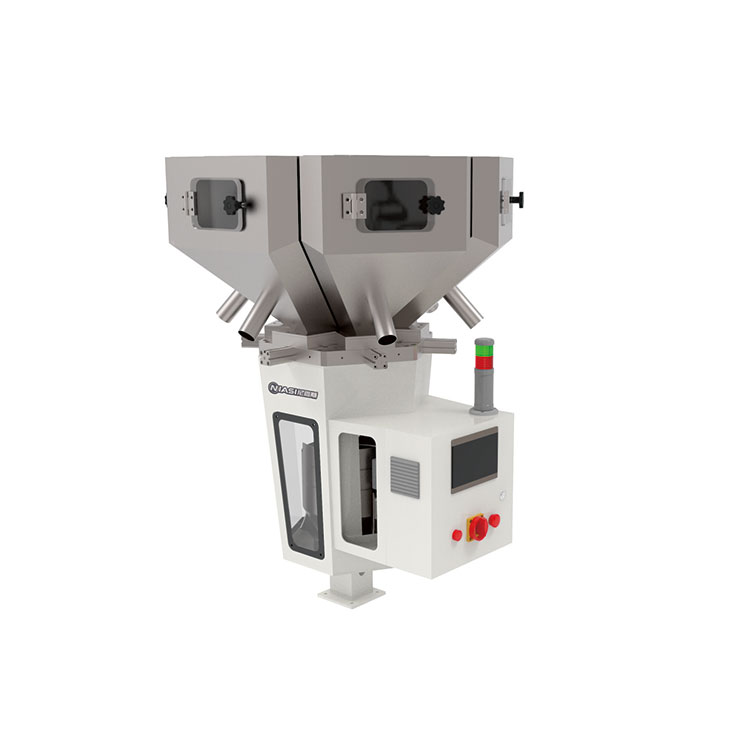
Table of Contents
Introduction to Gravimetric Blenders
Gravimetric blenders, sometimes referred to as weight-based blenders, are advanced machines designed to automatically combine multiple raw materials in precise ratios. Unlike volumetric blenders that rely on volume measurements, gravimetric systems measure materials by weight, ensuring consistency and accuracy in each batch.
These machines are widely used in the plastics, chemical, and food industries where precise formulation is critical. By incorporating automation, gravimetric blenders reduce human error, enhance production reliability, and optimize material usage.
How Gravimetric Blenders Work
The working principle of a gravimetric blender is straightforward but highly effective. The system continuously measures the weight of each component using precision load cells. Once the desired ratios are confirmed, the blender releases materials into the mixing chamber.
- Step 1: Material Feeding – Raw materials are loaded into hoppers connected to load cells.
- Step 2: Weight Measurement – Each material’s weight is continuously monitored for precision.
- Step 3: Mixing – Materials are discharged into a mixing chamber and blended thoroughly.
- Step 4: Output Control – The blended product is delivered to downstream processing equipment.
Compared to traditional blenders, gravimetric blenders offer improved accuracy, reduced waste, and enhanced repeatability.
Key Benefits for Manufacturers
| Benefit | Description |
|---|---|
| High Accuracy | Weight-based measurement ensures exact ratios, improving product quality. |
| Material Savings | Reduces overuse of expensive materials and minimizes waste. |
| Consistency | Every batch maintains the same formulation, crucial for brand reliability. |
| Automation & Efficiency | Reduces labor costs and human error while speeding up production cycles. |
Common Operational Challenges
Even with advanced technology, gravimetric blenders require attention to ensure optimal performance:
- Hopper Contamination: Mixing incompatible materials can damage product quality.
- Calibration Issues: Load cells must be calibrated regularly to maintain accuracy.
- Material Flow Problems: Sticky or damp materials may clog the system.
- Software Integration: Proper connection with existing production software is essential for automation benefits.
Tips for Choosing the Right Blender
When selecting a gravimetric blender for your facility, consider the following factors:
- Number of Components: Ensure the blender can handle all materials required for your formulations.
- Throughput Capacity: Match the blender's output to your production scale.
- Integration: Check compatibility with your existing machinery and control systems.
- Maintenance Requirements: Look for easily accessible load cells and cleaning procedures.
- Reputable Manufacturer: Choose a reliable supplier like Niasi to ensure long-term support and quality.
Frequently Asked Questions
-
Q1: Can a gravimetric blender handle powders and granules simultaneously?
A1: Yes, modern blenders are designed to handle multiple forms of materials in one batch, provided the hoppers and feed systems are compatible.
-
Q2: How often should the blender be calibrated?
A2: Calibration should be done at least monthly or whenever a significant change in material density occurs.
-
Q3: Is operator training necessary?
A3: Yes, proper training ensures accurate operation, reduces downtime, and maintains product quality.
-
Q4: How does it compare to volumetric blenders?
A4: Gravimetric blenders provide higher precision, reduce waste, and ensure consistency, whereas volumetric systems are simpler but less accurate.
Contact Us
Ready to elevate your production efficiency with a high-quality gravimetric blender? Niasi offers reliable, precise, and easy-to-integrate solutions tailored to your facility’s needs. Learn more about our products and get a personalized consultation today: Visit Niasi Gravimetric Blender Page. Contact us now to discuss your requirements and request a quote!