- English
- Español
- Português
- русский
- Français
- 日本語
- Deutsch
- tiếng Việt
- Italiano
- Nederlands
- ภาษาไทย
- Polski
- 한국어
- Svenska
- magyar
- Malay
- বাংলা ভাষার
- Dansk
- Suomi
- हिन्दी
- Pilipino
- Türkçe
- Gaeilge
- العربية
- Indonesia
- Norsk
- تمل
- český
- ελληνικά
- український
- Javanese
- فارسی
- தமிழ்
- తెలుగు
- नेपाली
- Burmese
- български
- ລາວ
- Latine
- Қазақша
- Euskal
- Azərbaycan
- Slovenský jazyk
- Македонски
- Lietuvos
- Eesti Keel
- Română
- Slovenski

How Does a Dehumidifying Dryer Improve Plastic Processing Efficiency?
Abstract: Moisture contamination is one of the most overlooked yet costly problems in plastic processing. A dehumidifying dryer provides a controlled, low-humidity environment to remove moisture from hygroscopic materials before molding or extrusion. This article explains how dehumidifying dryers work, why they are essential, and how they solve common production challenges such as defects, material degradation, and inconsistent product quality.
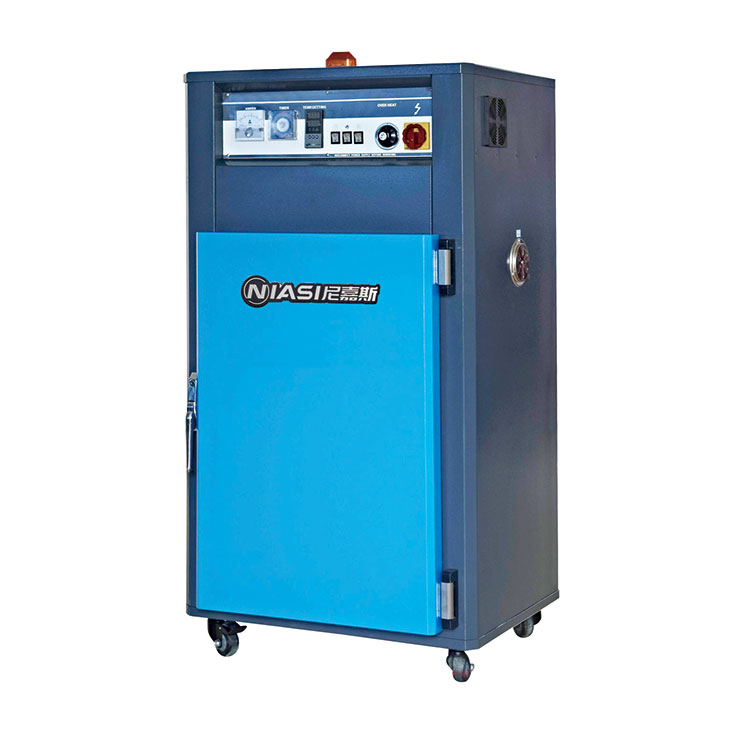
Table of Contents
- 1. Introduction
- 2. What Is a Dehumidifying Dryer?
- 3. How Does a Dehumidifying Dryer Work?
- 4. Key Benefits for Plastic Processing
- 5. Dehumidifying Dryer vs. Traditional Dryers
- 6. Common Applications
- 7. How to Choose the Right System
- 8. Frequently Asked Questions
1. Introduction
In plastic manufacturing, even a small amount of moisture can lead to serious defects such as bubbles, silver streaks, poor surface finish, and reduced mechanical strength. Many engineers underestimate how critical proper drying is, especially when working with hygroscopic materials like PET, PA, or PC.
This is where a dehumidifying dryer becomes indispensable. It ensures consistent drying performance by maintaining low dew point air, significantly improving product quality and operational efficiency.
2. What Is a Dehumidifying Dryer?
A dehumidifying dryer is an industrial drying system designed to remove moisture from plastic resins before processing. Unlike conventional hot air dryers, it uses a closed-loop system with desiccant material to produce ultra-dry air.
- Removes both surface and internal moisture
- Maintains stable drying conditions
- Prevents reabsorption of moisture
This makes it particularly suitable for engineering plastics that are highly sensitive to humidity.
3. How Does a Dehumidifying Dryer Work?
The working principle revolves around moisture removal through controlled airflow and desiccant adsorption.
Step-by-step process:
- Ambient air enters the system and passes through a filter.
- The air is dehumidified using a desiccant rotor or molecular sieve.
- Dry air is heated to the required temperature.
- The heated dry air is circulated through the material hopper.
- Moisture from the plastic resin is absorbed and carried away.
The system operates in a closed loop, ensuring minimal energy loss and consistent performance.
4. Key Benefits for Plastic Processing
| Benefit | Description |
|---|---|
| Improved Product Quality | Eliminates defects like bubbles, streaks, and brittleness |
| Consistent Performance | Maintains stable dew point regardless of ambient conditions |
| Material Protection | Prevents hydrolysis and degradation of polymers |
| Energy Efficiency | Closed-loop system reduces energy consumption |
| Higher Productivity | Reduces downtime and scrap rates |
5. Dehumidifying Dryer vs. Traditional Dryers
| Feature | Dehumidifying Dryer | Hot Air Dryer |
|---|---|---|
| Moisture Removal | Deep drying (internal + surface) | Surface only |
| Air Quality | Low dew point air | Ambient air dependent |
| Stability | Consistent | Fluctuates with humidity |
| Application | Hygroscopic materials | Non-hygroscopic materials |
While hot air dryers may seem cost-effective initially, they often lead to higher long-term costs due to defects and material waste.
6. Common Applications
- Injection molding of engineering plastics
- PET preform production
- Medical-grade plastic manufacturing
- Automotive component production
- Electronics housing and connectors
Any process requiring high precision and material integrity benefits significantly from dehumidifying drying technology.
7. How to Choose the Right System
Selecting the right dehumidifying dryer depends on several factors:
- Material Type: Hygroscopic vs non-hygroscopic
- Throughput Capacity: Required drying volume per hour
- Dew Point Requirement: Typically -40°C or lower
- Energy Consumption: Efficiency and operational cost
- Automation Level: PLC control and monitoring features
Working with a reliable manufacturer ensures optimal system configuration tailored to your production needs.
8. Frequently Asked Questions
Q1: Why is moisture harmful in plastic processing?
Moisture can cause hydrolysis, leading to reduced strength, poor appearance, and product failure.
Q2: What dew point is ideal for drying plastics?
Most engineering plastics require a dew point of -40°C or lower for effective drying.
Q3: Can I use a hot air dryer instead?
Only for non-hygroscopic materials. For hygroscopic plastics, a dehumidifying dryer is essential.
Q4: How long should materials be dried?
Drying time depends on material type, moisture content, and temperature, typically ranging from 2 to 6 hours.
Q5: Is energy consumption high?
Modern systems are designed for energy efficiency, often reducing overall operational costs compared to traditional methods.
Conclusion
A dehumidifying dryer is not just an optional accessory—it is a critical component for achieving high-quality, defect-free plastic products. By controlling moisture at a precise level, manufacturers can significantly enhance efficiency, reduce waste, and maintain consistent production standards.
Dongguan Niasi Plastic Machinery Co., Ltd. specializes in advanced drying solutions tailored to modern manufacturing demands. If you are looking to optimize your production line and eliminate moisture-related issues, contact us today to discover how our dehumidifying dryer systems can elevate your performance and profitability.
Previous:How Does a Water Chiller Work?