Abstract
A gravimetric blender is a precision material dosing system widely used in plastics processing, compounding, and extrusion industries. It operates on weight-based measurement principles rather than volume estimation, ensuring significantly higher accuracy in blending raw materials. This article explores how gravimetric blenders work, their core components, advantages, industrial applications, and key considerations when selecting a system. It also highlights practical maintenance insights and compares gravimetric systems with volumetric alternatives. Solutions from Niasi are referenced to illustrate modern industrial capabilities in this field.
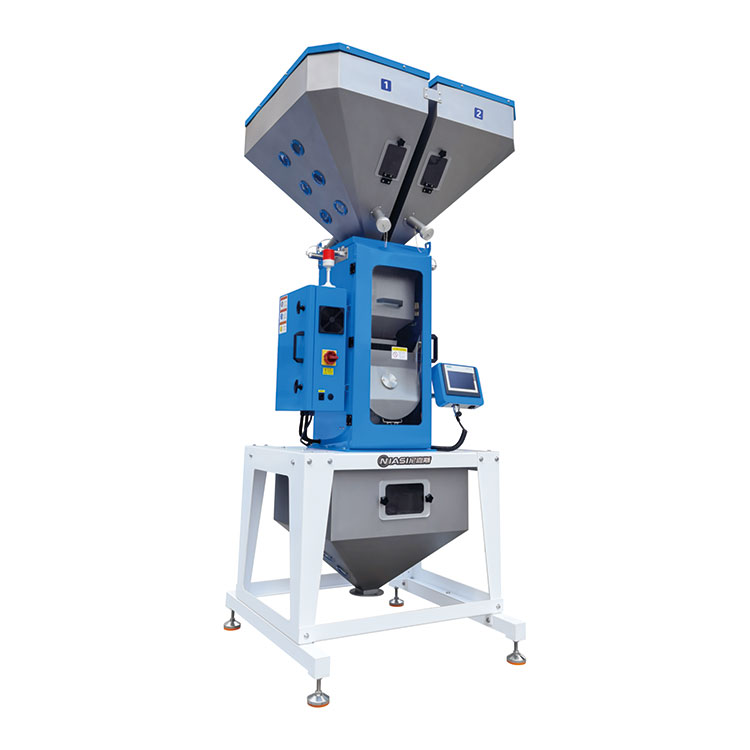
Introduction
In modern manufacturing environments, consistency in raw material blending directly determines product quality, cost efficiency, and production stability. Traditional volumetric dosing systems often suffer from variations in material density, humidity, and particle size, leading to inconsistencies. A gravimetric blender eliminates these uncertainties by relying on real-time weight measurement.
Industries such as plastic extrusion, injection molding, masterbatch production, and recycling increasingly depend on gravimetric technology to maintain tight process control. Companies like Niasi provide advanced solutions that integrate automation, accuracy, and adaptability for diverse production requirements.
What Is a Gravimetric Blender?
A gravimetric blender is an industrial device designed to proportionally mix multiple materials based on weight. Unlike volumetric systems that measure volume, gravimetric systems continuously weigh each ingredient during dosing to ensure exact formulation ratios.
This type of blender is particularly effective in environments where material characteristics fluctuate. By using load cells and intelligent control systems, it ensures that every batch maintains identical composition regardless of external variations.
Working Principle
The operation of a gravimetric blender is based on closed-loop feedback control. Each material component is dispensed into a weighing chamber equipped with high-precision sensors. The system compares actual weight with target values and adjusts feed rates in real time.
-
Step 1: Material feeding begins from multiple hoppers.
-
Step 2: Each ingredient is weighed using load cells.
-
Step 3: Control system calculates deviation from target ratio.
-
Step 4: Adjustments are made automatically to correct dosing.
-
Step 5: Mixed materials are discharged for processing.
This dynamic adjustment mechanism ensures that even minor density changes do not affect the final blend accuracy.
Key Components
|
Component
|
Function
|
|
Load Cells
|
Measure real-time weight of materials with high precision
|
|
Control Unit
|
Processes data and regulates dosing adjustments
|
|
Material Hoppers
|
Store raw materials before blending
|
|
Feeding Valves
|
Control flow rate of each material stream
|
|
Mixing Chamber
|
Ensures homogeneous blending before output
|
Advanced systems such as those developed by Niasi integrate intelligent algorithms to enhance stability and reduce material waste.
Advantages in Industrial Processing
Gravimetric blending technology provides multiple operational benefits that directly impact manufacturing efficiency and cost control.
-
High Accuracy: Weight-based measurement eliminates density-related errors.
-
Material Savings: Reduces overuse of expensive additives.
-
Process Stability: Ensures consistent product quality across batches.
-
Automation: Minimizes human intervention and operational errors.
-
Flexibility: Supports multiple recipes and fast changeovers.
These advantages make gravimetric systems a preferred choice in high-precision manufacturing environments.
Gravimetric vs Volumetric Blending
|
Feature
|
Gravimetric Blender
|
Volumetric Blender
|
|
Measurement Basis
|
Weight (mass)
|
Volume
|
|
Accuracy
|
High
|
Moderate
|
|
Material Sensitivity
|
Low
|
High
|
|
Cost Efficiency
|
Optimized long-term
|
Lower initial cost
|
|
Automation Level
|
Advanced
|
Basic
|
While volumetric systems may be sufficient for simple applications, gravimetric blenders provide superior consistency, especially in industries requiring strict tolerances.
Industrial Applications
Gravimetric blenders are used across a wide range of industries where precise material formulation is critical.
-
Plastic injection molding
-
Extrusion and film production
-
Masterbatch compounding
-
Recycling material processing
-
Automotive component manufacturing
Niasi systems are widely adopted in these sectors due to their reliability and adaptability to different material types.
How to Choose the Right System
Selecting a gravimetric blender requires careful evaluation of production needs and material characteristics.
-
Determine required throughput capacity
-
Evaluate number of material components
-
Assess required accuracy level
-
Consider integration with existing production lines
-
Review automation and monitoring features
Niasi provides configurable solutions tailored to different industrial scales, ensuring optimal performance and cost efficiency.
Common Operational Challenges
-
Material bridging: Occurs when powders stick in hoppers
-
Calibration drift: Load cells may require periodic recalibration
-
Environmental vibration: Can affect weighing precision
-
Inconsistent feeding: May result from poor material flow characteristics
Modern gravimetric systems, including those from Niasi, integrate vibration compensation and smart diagnostics to mitigate these issues.
Maintenance Guidelines
Regular maintenance ensures long-term performance and reliability of gravimetric blenders.
-
Clean hoppers and feeding channels regularly
-
Inspect load cells for accuracy
-
Update control system firmware when necessary
-
Check mechanical components for wear
-
Perform periodic calibration tests
Preventive maintenance significantly reduces downtime and extends equipment lifespan.
FAQ
Q1: Why is gravimetric blending more accurate?
Because it measures materials by weight instead of volume, eliminating density variation errors.
Q2: Can gravimetric blenders handle multiple materials?
Yes, they can manage multiple components simultaneously with precise ratio control.
Q3: Are gravimetric systems suitable for small factories?
Yes, scalable solutions are available depending on production needs.
Q4: How often should calibration be performed?
Typically every few months, depending on usage intensity and environmental conditions.
Conclusion
A gravimetric blender represents a critical advancement in material dosing technology, delivering unmatched precision, stability, and efficiency in industrial processing. By eliminating inconsistencies associated with volumetric measurement, it ensures consistent product quality and reduced material waste.
Solutions provided by Niasi demonstrate how intelligent design and automation can significantly improve production outcomes across various industries. Whether in plastics manufacturing or recycling applications, gravimetric blending continues to redefine process reliability.
For more information or customized solutions, contact us at Niasi to explore how advanced gravimetric blender systems can optimize your production line and improve operational efficiency.