- English
- Español
- Português
- русский
- Français
- 日本語
- Deutsch
- tiếng Việt
- Italiano
- Nederlands
- ภาษาไทย
- Polski
- 한국어
- Svenska
- magyar
- Malay
- বাংলা ভাষার
- Dansk
- Suomi
- हिन्दी
- Pilipino
- Türkçe
- Gaeilge
- العربية
- Indonesia
- Norsk
- تمل
- český
- ελληνικά
- український
- Javanese
- فارسی
- தமிழ்
- తెలుగు
- नेपाली
- Burmese
- български
- ລາວ
- Latine
- Қазақша
- Euskal
- Azərbaycan
- Slovenský jazyk
- Македонски
- Lietuvos
- Eesti Keel
- Română
- Slovenski

How Does a Hopper Loader Improve Material Handling Efficiency?
Article Abstract
How does a hopper loader contribute to stable, efficient, and automated material feeding in industrial production? This article provides a comprehensive examination of hopper loaders from a technical and application-oriented perspective. It introduces the core working principles, key parameters, operational advantages, and system integration considerations of hopper loaders used across plastics processing, food manufacturing, chemical handling, and bulk material transfer.
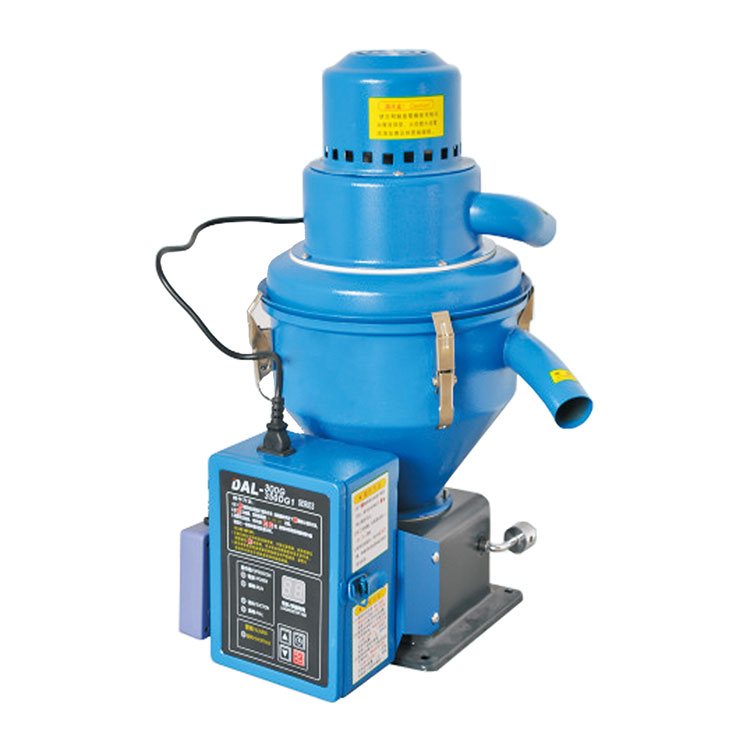
Table of Contents
- 1. How Does a Hopper Loader Work in Industrial Systems?
- 2. How Can Hopper Loader Specifications Be Evaluated for Different Applications?
- 3. How Is a Hopper Loader Applied Across Key Industries?
- 4. How Will Hopper Loader Technology Evolve in the Future?
Article Outline
- Technical overview and operating principles
- Detailed parameter analysis and configuration guidance
- Application scenarios and system integration
- Common questions and future development trends
1. How Does a Hopper Loader Work in Industrial Systems?
A hopper loader is an automated material conveying device designed to transport granular or powdered materials from storage containers to processing equipment in a controlled and continuous manner. Commonly installed on injection molding machines, extruders, mixers, or batching systems, the hopper loader plays a critical role in ensuring consistent material supply while reducing manual handling.
The operating principle of a hopper loader is typically based on vacuum suction. A vacuum motor generates negative pressure within the conveying pipeline, drawing raw materials from a storage hopper or silo into the loader chamber. Once the preset material level is reached, the vacuum motor stops, and the material is discharged by gravity into the processing machine below.
From a system design perspective, hopper loaders are valued for their compact structure, ease of installation, and compatibility with automated production lines. Their closed conveying method helps minimize material contamination, reduce dust generation, and improve workplace cleanliness.
In modern manufacturing environments, hopper loaders are increasingly integrated with sensors, control panels, and centralized automation systems. This allows real-time monitoring of material flow, load status, and fault conditions, supporting higher production stability and lower operational risk.
2. How Can Hopper Loader Specifications Be Evaluated for Different Applications?
Selecting an appropriate hopper loader requires careful evaluation of technical parameters, operating conditions, and material characteristics. Performance mismatches can lead to unstable feeding, excessive energy consumption, or premature equipment wear.
Below is a consolidated overview of common hopper loader parameters that are typically reviewed during the selection process:
| Parameter | Typical Range | Technical Description |
|---|---|---|
| Conveying Capacity | 200–2000 kg/h | Defines the maximum material transfer rate under standard conditions. |
| Vacuum Motor Power | 0.75–2.2 kW | Determines suction strength and conveying distance capability. |
| Conveying Distance | 3–10 meters | Maximum horizontal and vertical material transport range. |
| Material Compatibility | Pellets, powder, regrind | Supported material forms based on particle size and flowability. |
| Hopper Volume | 6–12 liters | Defines the batch size per feeding cycle. |
| Control Method | Micro-switch / Sensor-based | Ensures accurate material level detection and cycle control. |
These parameters must be matched against production throughput, material density, and environmental constraints. For example, lightweight plastic pellets require different suction dynamics than fine chemical powders. Additionally, high-temperature or abrasive materials may require reinforced components or specialized filters.
Proper evaluation of these specifications ensures reliable feeding performance, energy efficiency, and long-term operational stability.
3. How Is a Hopper Loader Applied Across Key Industries?
Hopper loaders are widely used across multiple industrial sectors due to their adaptability and efficiency. Their application scope continues to expand as automation levels increase.
Plastics Processing
In injection molding and extrusion environments, hopper loaders are used to convey virgin resin, masterbatch, or recycled material directly to processing machines. Consistent feeding helps maintain melt quality and reduces material waste caused by feeding interruptions.
Food and Beverage Manufacturing
For dry food ingredients such as grains, sugar, or additives, hopper loaders enable hygienic and enclosed material transfer. Stainless steel constructions and food-grade seals are commonly adopted to meet sanitation standards.
Chemical and Pharmaceutical Production
In chemical processing, hopper loaders support the controlled feeding of powders and granules into reactors or mixers. Their enclosed design helps minimize operator exposure and improves compliance with safety regulations.
Bulk Material Handling
Hopper loaders are also integrated into centralized material handling systems, supporting multiple machines from a single storage source. This configuration improves space utilization and reduces manual material transport.
Hopper Loader Common Questions and Answers
Q: How does a hopper loader handle different material densities?
A: Hopper loaders adjust to material density through motor power selection, pipe diameter configuration, and cycle timing control. Heavier materials may require higher vacuum pressure and shorter conveying distances to maintain stable flow.
Q: How often should hopper loader filters be maintained?
A: Filter maintenance frequency depends on material cleanliness and operating hours. In high-dust environments, weekly inspection is recommended, while clean pellet applications may require monthly checks to ensure optimal suction performance.
Q: How can material blockage in a hopper loader be prevented?
A: Blockage prevention involves selecting appropriate pipe diameters, maintaining smooth internal surfaces, and ensuring material dryness. Optional air blowback systems can further reduce the risk of residual buildup.
4. How Will Hopper Loader Technology Evolve in the Future?
The future development of hopper loaders is closely linked to trends in smart manufacturing and energy optimization. As factories pursue higher efficiency and lower operating costs, hopper loader designs are evolving accordingly.
Advanced sensor integration will allow predictive monitoring of material flow and component wear, reducing unplanned downtime. Energy-efficient motors and intelligent control algorithms will further optimize power consumption during conveying cycles.
Additionally, modular system designs will enhance scalability, enabling manufacturers to expand production capacity without significant infrastructure changes. Enhanced material compatibility will also support the growing use of recycled and composite materials in industrial processes.
In this context, hopper loaders are expected to remain a core component of automated material handling systems, supporting both operational reliability and long-term sustainability goals.
Conclusion and Brand Introduction
Understanding how a hopper loader functions, how its specifications align with application requirements, and how it integrates into modern production systems is essential for achieving stable and efficient material handling. From plastics processing to food manufacturing, hopper loaders continue to support automation and operational consistency across industries.
Niasi focuses on delivering hopper loader solutions engineered for reliability, adaptability, and long-term performance across diverse industrial environments. Product development emphasizes precise parameter matching, durable construction, and compatibility with automated production lines.
For further technical details, configuration guidance, or application-specific recommendations, contact us to discuss hopper loader solutions tailored to operational requirements and production objectives.