- English
- Español
- Português
- русский
- Français
- 日本語
- Deutsch
- tiếng Việt
- Italiano
- Nederlands
- ภาษาไทย
- Polski
- 한국어
- Svenska
- magyar
- Malay
- বাংলা ভাষার
- Dansk
- Suomi
- हिन्दी
- Pilipino
- Türkçe
- Gaeilge
- العربية
- Indonesia
- Norsk
- تمل
- český
- ελληνικά
- український
- Javanese
- فارسی
- தமிழ்
- తెలుగు
- नेपाली
- Burmese
- български
- ລາວ
- Latine
- Қазақша
- Euskal
- Azərbaycan
- Slovenský jazyk
- Македонски
- Lietuvos
- Eesti Keel
- Română
- Slovenski

How Does A Central Feeding System Evolve To Solve Today’s Factory Bottlenecks?
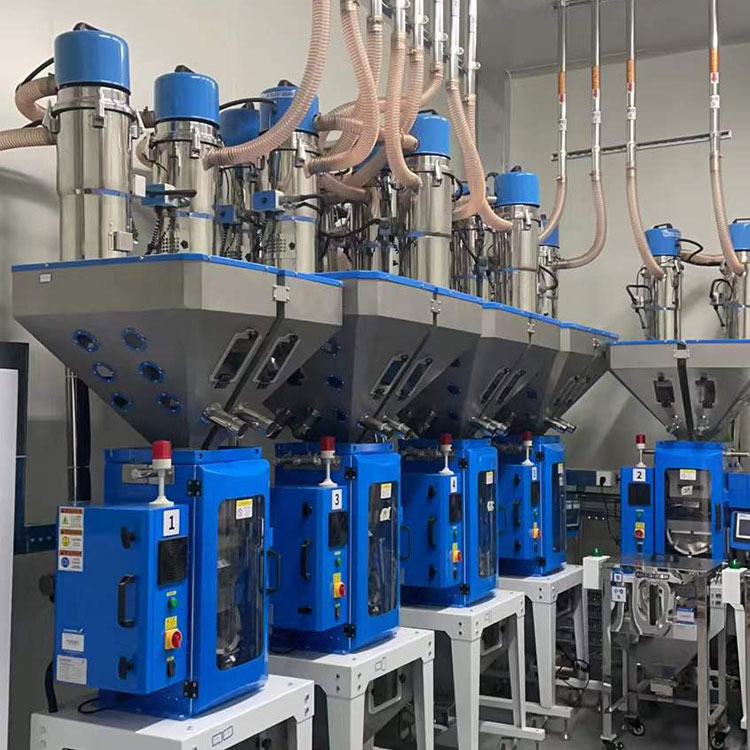
Manufacturers are juggling shorter runs, tighter audits, and lean crews. In that shift, many discover material handling—not the presses—is the real constraint. As NIASI has rolled out upgrades across different sectors, the Central Feeding System has steadily matured from a single loop into a factory-wide platform for clean conveying, precise batching, fast color changes, and unmanned night shifts, all without adding headcount.
What Problems Does A Modern Central Feeding System Actually Remove?
-
Loader starvation and false “no material” alarms that stop machines
-
Moisture defects on hygroscopic resins and re-wetting during transfer
-
Color contamination and long purges during changeovers
-
Inconsistent batching that drives cosmetic and mechanical variability
-
Scattered dryers that waste energy and hide problems
-
Weak lot genealogy across silos, dryers, and machines
Which Add-On Modules Deliver The Fastest Gains First?
-
Smart receivers and closed-loop vacuum to stabilize supply, cut angel hair
-
Dew-point controlled dryers to protect PET, PC, PA from re-absorption
-
Automatic selection valves with coded couplers to prevent wrong hookups
-
Line purgers and cut-and-weigh purge bins to shorten color changes and quantify scrap
-
Central dedusting and inline metal detection to protect screws and cosmetics
-
Gravimetric blending at the press to hold masterbatch ratios through ramps
-
MES/PLC gateways to lock recipes and tie every shot to a lot and dew point
How Do The Main System Architectures Compare For Flexibility And Cost?
| Question | Single-Loop Vacuum | Dual-Loop Vacuum | Hybrid Vacuum + Pressure |
|---|---|---|---|
| Where does it fit best? | Small to mid cells sharing materials | Medium factories with frequent changes | Large campuses and long distances |
| Throughput window? | Low–moderate | Moderate–high | Highest over long runs |
| Changeover impact? | More manual purging | Segregated paths shorten purges | Dedicated circuits minimize purges |
| Energy vs capex? | Lowest entry cost | Balanced with redundancy | Higher capex, lower per-kg OPEX |
| Typical add-ons? | Smart receivers, purgers | Auto selectors, coded couplers | Silo manifolds, dry-air trunks |
Why Do Drying And Dry-Air Conveying Need To Work As One?
-
Drying is wasted if pellets re-absorb moisture in ambient lines
-
Dry-air trunks protect IV, gloss, and tensile properties at the machine throat
-
Dew-point sensors and interlocks keep limits honest during peaks and restarts
How Do You Size Pumps And Lines Without Creating Fines And Angel Hair?
-
Target conveying velocity, not just pipe size to suspend pellets without excess shear
-
Balance station valve cycles to avoid heat-soak and soft pellets in hot lines
-
Use sweeping bends and hard-coat elbows to extend line life on abrasive resins
-
Automate purge routines between recipes to lock in color stability
What Prevents Material Mix-Ups During Fast Changeovers?
-
Recipe-locked selectors open only valid circuits for the SKU
-
RFID or mechanically coded couplers physically block wrong hookups
-
Color-specific purge bins prevent cross-contamination at the machine
-
Barcode lot scans at silo, dryer, and press keep genealogy clean
Where Do Regrind And Additives Fit Without Compromising Quality?
-
Central granulation with dedusting closes the loop on runners and flash
-
Sieve and metal capture safeguard screws, hot runners, thin-wall parts
-
Regrind caps by recipe stop “percentage drift” on night shifts
Which Industries Benefit Most And Why?
| Industry | Typical Materials | Critical Risks | Why Central Feeding Helps |
|---|---|---|---|
| Plastics packaging | PP PE PET PS | Mix-ups, moisture, dust | Recipe lock, dry-air conveying, dedusting |
| Medical disposables | PP PC PA ABS | Cleanliness, traceability | Closed loops, coded couplers, lot tracking |
| Film and sheet | PE EVA PETG | Gels, fines, moisture | Central dedusting, dew-point control |
| Wire and cable | PVC XLPE PA | Stabilizer control, purity | Central batching, metal detection |
| Building materials | PVC ASA PMMA | Color consistency, fillers | Gravimetric blending, purge routines |
| Home appliances | ABS PC PC/ABS | Swirls, black specs | Line purgers, anti-abrasion elbows |
| Auto interior | PP TPO PA6 GF | Fiber carryover, moisture | Isolated lines, dry-air trunks, sieving |
| 3C electronics | PC PBT LCP | Tight QA, ESD risk | Clean conveying, parameter records |
| Food and daily care | PET HDPE | Hygiene, auditability | Closed transfer, data retention |
How Do Controls Cut Energy Use While Improving Stability?
-
Demand-driven drying slows heaters and blowers when presses idle
-
Vacuum pump rotation evens wear and prevents hot-spot failures
-
Alarm rationalization removes noise so teams fix real issues faster
-
Shift dashboards surface dew point, fill rates, purge counts, and kWh/kg
What Maintenance Rhythm Keeps Uptime High Without Overservicing?
| Interval | Task | Why It Matters |
|---|---|---|
| Every shift | Empty fines traps and check receiver screens | Avoid starvation and pressure spikes |
| Weekly | Verify dew point and inspect for air leaks | Stabilize drying and cut energy waste |
| Monthly | Inspect elbows and vacuum filters | Prevent pinholes and suction loss |
| Quarterly | Calibrate load cells and flow sensors | Keep batching accurate and reports credible |
| Semiannual | Refresh desiccant and clean heat exchangers | Restore drying performance before peak season |
How Does A Central Feeding System Pay Back In Real Numbers?
-
Scrap reduction from moisture and color cross-contamination often falls 30–60% within one quarter
-
Changeover time drops from 20–40 minutes to 5–10 minutes with purgers and coded couplers
-
Labor savings show up as fewer “material chaser” call-outs and safer hookups
-
Energy savings of 10–18% per kg are typical with centralized drying and pump logic
Which Pitfalls Should Be Avoided During The First Phase?
-
Sizing lines by diameter instead of required velocity and distance
-
Treating drying, conveying, and batching as separate islands
-
Skipping purge hardware to save capex and paying in scrap later
-
Running manual labels instead of coded connections
-
Rolling out software without SOPs and shift-friendly dashboards
What Does A Practical Upgrade Path Look Like If Budget Is Tight?
-
Stabilize loaders and add line purgers on the busiest machines
-
Convert hygroscopic resins to dew-point controlled dryers and dry-air trunks
-
Install automatic selectors and coded couplers at the manifold
-
Add gravimetric blending on cosmetic or strength-critical parts
-
Connect the system to MES/ERP for lots and parameters
-
Expand to dual loops or hybrid as SKUs and distances grow
Why Do NIASI Projects Keep Extending Instead Of Replacing Systems?
-
Modular manifolds and selectors add circuits without ripping out trunks
-
Control updates unlock demand-based drying and smarter alarms
-
Standardized couplers and SOPs shorten onboarding for new operators
-
Local spares and service keep total cost predictable year-to-year
What Is The Next Best Step For Your Factory?
If you are battling moisture defects, color cross-contamination, or slow changeovers, you are exactly where many successful upgrades begin. Share your SKUs, distances, and materials and we will map a phased plan and ROI window tailored to your floor. Contact us to request a quick line-by-line assessment, or send an inquiry with photos of your manifold and dryers—we will reply with a clear, actionable proposal and timeline.