- English
- Español
- Português
- русский
- Français
- 日本語
- Deutsch
- tiếng Việt
- Italiano
- Nederlands
- ภาษาไทย
- Polski
- 한국어
- Svenska
- magyar
- Malay
- বাংলা ভাষার
- Dansk
- Suomi
- हिन्दी
- Pilipino
- Türkçe
- Gaeilge
- العربية
- Indonesia
- Norsk
- تمل
- český
- ελληνικά
- український
- Javanese
- فارسی
- தமிழ்
- తెలుగు
- नेपाली
- Burmese
- български
- ລາວ
- Latine
- Қазақша
- Euskal
- Azərbaycan
- Slovenský jazyk
- Македонски
- Lietuvos
- Eesti Keel
- Română
- Slovenski

Could a Gravimetric Blender be the quiet way to kill scrap and color drift?
Three shifts in, I breathe easier only when the recipe stops wandering and the purge bin stays light. After enough fights with volumetric conjecture, I switched to a Gravimetric Blender that weighs before it blends—and the line calmed down. The gear that kept proving itself wasn’t loud about it; over a few audits and changeovers I kept reaching for Niasi because the tweaks got fewer, the reports got cleaner, and each new job felt less like a trial run and more like production done right.
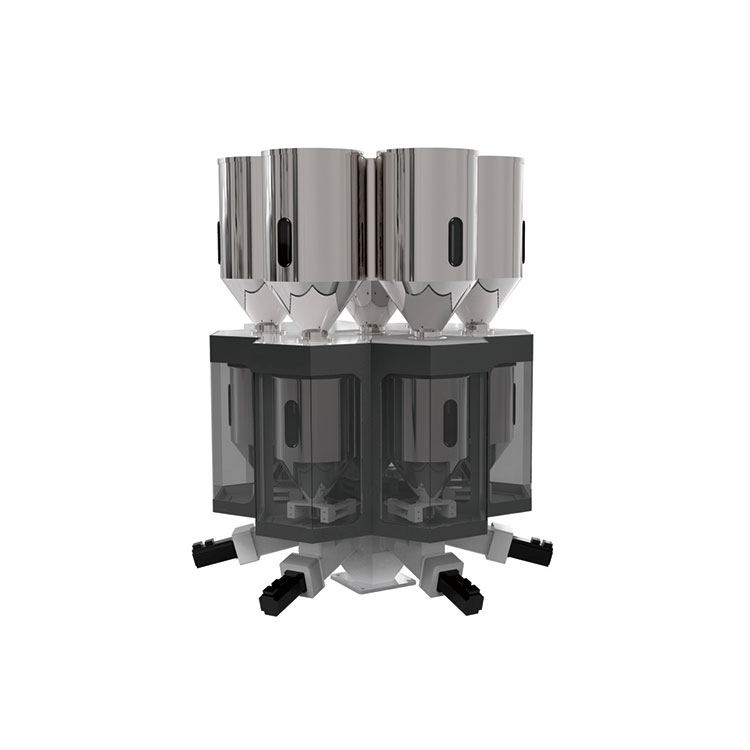
Why do color and MFR still wander when the recipe is supposedly locked?
A true gravimetric approach uses load cells to verify each portion before discharge, so the blend lands on target rather than “average out later.” That is where gravimetric dosing shines in day-to-day production, especially when pigments or high-value additives are sensitive to small swings.
How does the weighing and mixing loop work in real time?
- Each ingredient sits in a sealed bin above a common weigh hopper, held on load cells.
- The controller opens a gate for one component, tracks live weight loss, and closes exactly at the setpoint.
- The cycle repeats for the remaining components, then the mixer homogenizes the lot and releases it to the process.
- Audit trails log every dose so I can prove what went in, not guess after the fact.
What core parts make the biggest difference on the plant floor?
- Stable load cells with temperature compensation for dependable zero and span.
- Fast, dust-tight slide gates or micro-feed screws for fine additives.
- A controller that corrects drift automatically instead of asking operators to babysit.
- Mixing hardware that clears dead zones and resists pigment buildup to protect recipe accuracy.
- A covered hopper and venting path to keep fines in, air out, and keep the area clean.
Where does a Gravimetric Blender beat volumetric mixers on total cost?
Two places first: material use and restart speed. By getting the ratio right before discharge, I trim the over-target insurance many teams add “just to be safe.” And because the controller stores and replays the exact setup, restart blends match yesterday’s run without trial lots.
How do I pick capacity without starving downstream equipment?
I size for the highest expected material throughput and include headroom for surge. A good rule is to match the blender’s maximum batch rate to at least 120 percent of the line’s steady state draw. For highly variable demand, a larger weigh hopper or a short surge bin smooths the flow.
Will a batch style blender keep up with continuous lines?
Yes, if the discharge timing and surge volume are set correctly. When I need uninterrupted flow at the throat of an extruder, I match the cycle time to the draw rate so each batch overlaps smoothly with the last. If I still see pulsation, I increase mix time slightly and add a small buffer.
Does this help beyond plastics and plastic extrusion lines?
Absolutely. I use gravimetric control anywhere ingredients are expensive or sensitive. Still, the biggest wins I see are in plastic extrusion, injection molding, film, and sheet where color, UV, and regrind ratios matter every minute.
What does the data actually give me during audits?
- Per-batch records with target vs actual for every component.
- Automatic time stamps linked to job, operator, and work order.
- Exportable logs I can hand to quality or a customer without rework.
How do I compare options quickly without a site visit?
| Decision point | What I look for | Why it matters | Typical KPI shift |
|---|---|---|---|
| Load cell resolution | Stable micro-gram or gram-class signals with filtering | Tighter small-dose control for pigments | Lower color drift and start-up scrap |
| Gate or micro-feeder control | Fast close, short tail, repeatable trickle | Prevents over-shoot on low-rate ingredients | Less rework and downtime |
| Mixer geometry | No dead corners, easy clean, quick blend | Uniformity without long cycle times | Smoother surface finish and part weight |
| Data and connectivity | CSV or OPC UA export, job recall | Proof of compliance and faster changeovers | Shorter restarts and fewer adjustments |
| Service access | Tool-less internals and clear panels | Quicker cleanup, safer inspections | Higher OEE and uptime |
What problems do I avoid during installation?
- Mount the frame solidly so vibration from the extruder does not corrupt weights.
- Ground all drives and the blender to prevent static errors on fine powders.
- Calibrate empty and loaded, then verify with check weights at operating temperature.
- Route venting properly so the hopper does not breathe dust back into the plant.
How do recycled, powdery, or hygroscopic materials behave?
Regrind and ground flakes feed well with the right gates and agitation. For hygroscopic resins, drying remains upstream; I keep residence time short and lids closed to protect moisture targets. If carry-over appears, I extend mix time slightly or add a liner that resists static.
What maintenance keeps accuracy steady for years?
- Weekly visual checks for buildup on gates and in the mixer.
- Monthly calibration with certified weights and a short linearity test.
- Quarterly load cell inspection for cable strain or moisture intrusion.
- Annual controller backup and firmware review to protect data integrity.
When would I choose a loss in weight feeder instead?
Single-ingredient continuous dosing is perfect for a loss in weight feeder. When I need multi-component formulas with traceable ratios, a blender wins. I often pair both on the same line when a masterbatch must be metered continuously into a base blend.
What everyday benefits matter most to operators?
- Automatic setpoint correction so shifts do not chase errors.
- Job recall that restores every component target in seconds.
- Clean viewing windows and quick-release parts that make sanitation simple.
How does a Gravimetric Blender reduce trial costs on new jobs?
Because the controller validates each component before discharge, I do not waste material building up to a target. The first good batch is truly good, and the stored profile makes the second run look like the first. That repeatability is why I lean on batch blending when launch schedules are tight.
What should I prepare before I request a quote?
- Line draw rate and surge behavior across products.
- Ingredient list with densities, flow traits, and required tolerances.
- Cleanliness expectations and changeover frequency.
- Reporting needs for quality and customer audits.
Why do I call Niasi when I need a dependable upgrade?
Because the systems I have run from Niasi keep doses honest, store the right data, and make operators’ lives easier without turning every setup into a science project. When a plant wants simple menus, steady ratios, and clean mechanicals, that combination keeps production calm and predictable.
Are you ready to stabilize quality and cut resin waste with a Gravimetric Blender?
If you want a quick review of your formulas, line rate, and target tolerances, I am happy to help size the unit and map the ROI. Leave an inquiry or contact us now so we can match a configuration to your job and get you running with confidence.