- English
- Español
- Português
- русский
- Français
- 日本語
- Deutsch
- tiếng Việt
- Italiano
- Nederlands
- ภาษาไทย
- Polski
- 한국어
- Svenska
- magyar
- Malay
- বাংলা ভাষার
- Dansk
- Suomi
- हिन्दी
- Pilipino
- Türkçe
- Gaeilge
- العربية
- Indonesia
- Norsk
- تمل
- český
- ελληνικά
- український
- Javanese
- فارسی
- தமிழ்
- తెలుగు
- नेपाली
- Burmese
- български
- ລາວ
- Latine
- Қазақша
- Euskal
- Azərbaycan
- Slovenský jazyk
- Македонски
- Lietuvos
- Eesti Keel
- Română
- Slovenski

How Do Vertical Feed Mixers Improve Feed Efficiency?
Summary: Vertical Feed Mixers are essential in modern feed production, allowing uniform mixing of raw materials and improving livestock nutrition. This article explores their operation, benefits, selection tips, and maintenance practices to help manufacturers and farmers achieve optimal performance.
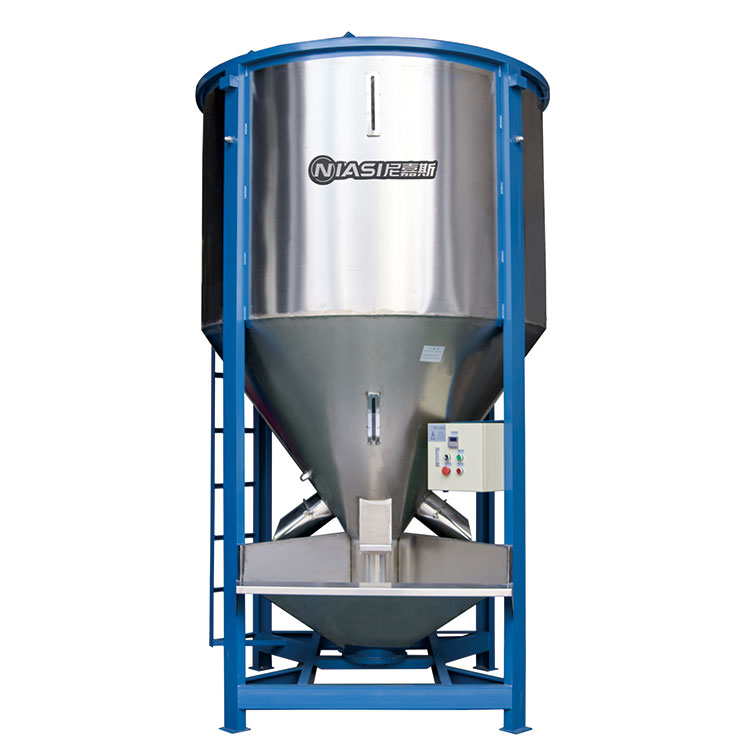
Table of Contents
- Introduction to Vertical Feed Mixers
- How Vertical Feed Mixers Work
- Key Benefits of Using Vertical Feed Mixers
- Guide to Choosing the Right Vertical Feed Mixer
- Maintenance and Safety Tips
- Frequently Asked Questions
Introduction to Vertical Feed Mixers
Vertical Feed Mixers have become a cornerstone in feed production, especially for farms and feed processing plants seeking consistency in feed quality. Niasi Factory has been specializing in the design and production of these mixers for over a decade, ensuring high-performance equipment that meets industrial standards.
- Compact design suitable for limited space.
- Efficient mixing of large quantities of feed in a short time.
- Compatible with various raw materials including grains, pellets, and supplements.
How Vertical Feed Mixers Work
The operation principle of Vertical Feed Mixers is straightforward yet highly effective:
- The screw rotates rapidly to lift raw materials from the bottom to the top of the barrel.
- The materials are dispersed through an umbrella-shaped spread.
- Gravity returns the materials to the bottom, completing the tumbling and mixing process.
This design ensures uniform distribution of nutrients and additives, reducing feed inconsistencies and improving livestock performance.
| Model | Power | Capacity | RPM | Electric Heating | Air Blower | Voltage | Dimensions (mm) |
|---|---|---|---|---|---|---|---|
| NBR-500KG | 4kw | 500kg | 350 | 12KW | 0.55KW | 380V | 1200*2500 |
| NBR-1000KG | 4kw | 1000kg | 350 | 18KW | 0.75KW | 380V | 1500*2750 |
| NBR-2000KG | 5.5kw | 2000kg | 350 | 30KW | 1.5KW | 380V | 1850*3400 |
| NBR-3000KG | 5.5kw | 3000kg | 300 | 30KW | 1.5KW | 380V | 2100*3700 |
| NBR-4000KG | 7.5kw | 4000kg | 300 | 30KW | 1.5KW | 380V | 2100*4000 |
| NBR-5000KG | 7.5kw | 5000kg | 300 | 30KW*2 | 1.5KW*2 | 380V | 2300*4500 |
Key Benefits of Using Vertical Feed Mixers
- Time Efficiency: Mixes large quantities quickly.
- Consistent Feed Quality: Uniform nutrient distribution.
- Durability: Sturdy design reduces wear and tear.
- Energy Savings: Optimized motor and screw design reduces electricity usage.
- Flexible Operation: Handles a variety of feed types without modification.
Guide to Choosing the Right Vertical Feed Mixer
When selecting a Vertical Feed Mixer, consider the following factors:
- Capacity: Match the mixer capacity to your daily production needs.
- Motor Power: Ensure sufficient power to mix all materials evenly.
- Optional Features: Electric heating and air blowers can enhance performance for specific feed types.
- Space Availability: Ensure installation space accommodates dimensions comfortably.
- After-Sales Support: Choose a supplier with strong technical support like Niasi Factory.
Maintenance and Safety Tips
- Regularly inspect screws and bearings for wear.
- Keep the barrel clean to avoid material buildup.
- Check electrical connections and motor performance periodically.
- Follow the manufacturer's safety guidelines strictly.
- Lubricate moving parts according to operational schedule.
Frequently Asked Questions
- Q1: What types of feed can Vertical Feed Mixers handle?
- A1: They can handle grains, pellets, powders, and additive mixtures efficiently.
- Q2: How often should maintenance be performed?
- A2: Basic checks weekly, and detailed inspections monthly or as recommended by Niasi Factory.
- Q3: Can the mixers be customized?
- A3: Yes, Niasi Factory provides custom options including capacity, motor power, and additional features.
- Q4: How long does a typical mixing cycle take?
- A4: Depending on capacity, a full mix usually completes in 5-15 minutes.
For more information or to find the ideal Vertical Feed Mixer for your operation, contact us at Niasi Factory and receive expert guidance and competitive pricing.