- English
- Español
- Português
- русский
- Français
- 日本語
- Deutsch
- tiếng Việt
- Italiano
- Nederlands
- ภาษาไทย
- Polski
- 한국어
- Svenska
- magyar
- Malay
- বাংলা ভাষার
- Dansk
- Suomi
- हिन्दी
- Pilipino
- Türkçe
- Gaeilge
- العربية
- Indonesia
- Norsk
- تمل
- český
- ελληνικά
- український
- Javanese
- فارسی
- தமிழ்
- తెలుగు
- नेपाली
- Burmese
- български
- ລາວ
- Latine
- Қазақша
- Euskal
- Azərbaycan
- Slovenský jazyk
- Македонски
- Lietuvos
- Eesti Keel
- Română
- Slovenski

How Does a Gravimetric Blender Improve Industrial Material Blending?
Article Summary: Gravimetric Blenders play a critical role in precision material blending, ensuring consistent quality, improving production efficiency, and enabling automation in industrial processes. This article provides an in-depth look into the working principles, technical specifications, common questions, and industry applications of Gravimetric Blenders, highlighting practical considerations for manufacturers.
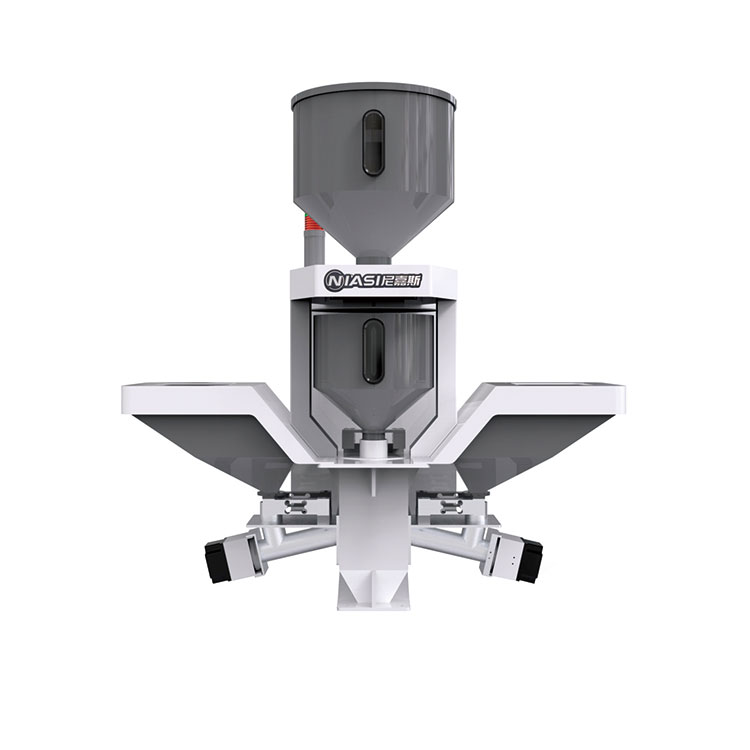
Table of Contents
- Understanding Gravimetric Blenders
- Technical Specifications and Industrial Applications
- Common Questions about Gravimetric Blenders
- Choosing Niasi Gravimetric Blenders and Contact Information
1. Understanding Gravimetric Blenders
Gravimetric Blenders, also known as loss-in-weight blenders, are industrial devices designed for precise and automated blending of granular or powdered materials. Unlike volumetric blenders, they measure material flow by weight in real-time, enabling unparalleled accuracy and consistent output. Gravimetric Blenders are widely utilized in plastics, chemicals, food processing, and pharmaceutical industries to enhance product uniformity and minimize waste.
The central focus of this discussion is to evaluate how Gravimetric Blenders can improve operational efficiency while maintaining product quality. Their ability to integrate with production lines and adapt to different materials makes them indispensable for modern manufacturing processes.
2. Technical Specifications and Industrial Applications
Below is a detailed table of the main technical specifications for a typical Gravimetric Blender:
| Parameter | Specification |
|---|---|
| Blending Capacity | 50–2000 kg/h |
| Number of Ingredients | 2–8 hoppers |
| Accuracy | ±0.1% of target weight |
| Control System | PLC with touch screen interface |
| Material Compatibility | Granules, powders, regrind materials, masterbatch |
| Communication | Ethernet/IP, Modbus, Profibus options |
| Construction Material | Stainless steel hoppers, robust frame |
| Integration | Inline with extrusion or molding machines |
| Safety Features | Overload protection, automatic shutoff, error alarm |
Gravimetric Blenders optimize industrial processes by providing:
- Precise material dosing for improved product consistency
- Reduced human intervention, supporting automated manufacturing
- Compatibility with multiple production machines and software integration
- Efficient material utilization, reducing waste and operational cost
3. Common Questions about Gravimetric Blenders
Q1: How does a Gravimetric Blender ensure accuracy in mixing different materials?
A1: Gravimetric Blenders utilize load cells to continuously weigh the input materials. The system automatically adjusts the flow rate for each ingredient to maintain precise weight ratios, ensuring that the final blend meets the required specifications. This continuous feedback loop eliminates human errors and compensates for fluctuations in material density.
Q2: Can Gravimetric Blenders handle multiple materials with varying particle sizes?
A2: Yes, Gravimetric Blenders are designed with hopper systems and control algorithms capable of handling materials with different densities and particle sizes. The system calculates weight flow dynamically, allowing simultaneous blending without segregation, which is critical for industries like plastics and pharmaceuticals.
Q3: What maintenance is required to keep a Gravimetric Blender operating efficiently?
A3: Regular maintenance includes cleaning hoppers and material lines to prevent cross-contamination, calibrating load cells to ensure accuracy, inspecting control systems for software updates or errors, and checking mechanical parts like augers and motors. Preventive maintenance is recommended to minimize downtime and extend the equipment lifespan.
4. Choosing Niasi Gravimetric Blenders and Contact Information
Niasi Gravimetric Blenders are designed with high precision, robust construction, and ease of integration for industrial manufacturing environments. They provide reliable performance for material handling, automated dosing, and consistent output, making them a preferred choice for industries seeking both efficiency and quality assurance.
Manufacturers can benefit from Niasi’s comprehensive solutions by selecting Gravimetric Blenders tailored to their production requirements. With advanced control systems, versatile hopper designs, and scalable capacities, these blenders offer measurable advantages in productivity and process control.
For inquiries or personalized recommendations, contact us to discuss the best Niasi Gravimetric Blender solution for your production line.